
Call us now :07971550555
 Send Inquiry
Robotic Auto Tds
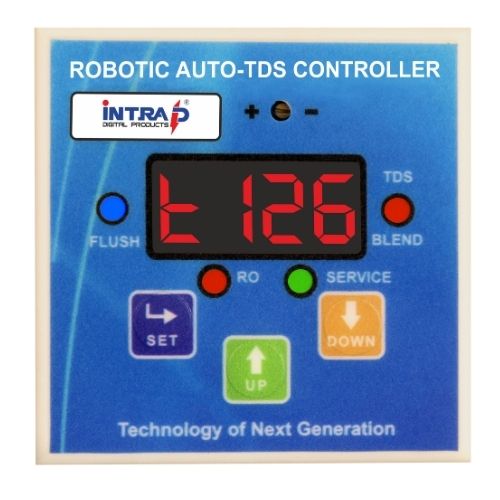

Robotic Auto Tds Specification
- Display
- Digital LED
- Frequency
- 50 Hz / 60 Hz
- Measuring Range
- 09999 ppm
- Mounting Type
- Panel Mount
- Switch Type
- Electronic
- Current
- Max 10 mA
- Usage & Applications
- Industrial Water Purification, Laboratory Water Testing, R.O. Plant, Swimming Pool Monitoring
- Installation Type
- Panel Mount
- Protection Level
- IP65
- Features
- Auto Calibration, High Precision, Large Display, Auto Temperature Compensation
- Connectivity Type
- Wired
- Pole Type
- Single
- Sensor Type
- Electrolytic Conductivity Sensor
- IP Rating
- IP65
- Output
- Digital
- Phase
- Single Phase
- Product Type
- Robotic Auto TDS Meter
- Operating Temperature
- 0C to 60C
- Working Temperature
- 0C to 60C
- Input
- DC 5V
- Pressure Type
- Atmospheric
- Diameter
- Approx. 25 mm
- Application
- Water Quality Monitoring
- Supply Voltage
- 5V DC
- Accuracy
- 2% F.S.
- Dimension (L*W*H)
- 90 mm 60 mm 23 mm
- Weight
- 120 g
- Reset Function
- Manual/Automatic
- Material
- ABS Plastic Housing
- Cable Length
- 1 meter
- Data Logging
- Optional via external module
- Response Time
- <2 seconds
- Compatibility
- Compatible with most automation systems
- Alarm Function
- Yes (High/Low TDS)
- Power Consumption
- Less than 0.5W
Robotic Auto Tds Trade Information
- Minimum Order Quantity
- 20 Pieces
- Delivery Time
- 2 Days
Robotic Auto Tds About
Robotic Automatic Total Dissolved Solids (TDS) control for RO purifiers offers several benefits:
Benefits:
1. Optimized Water Quality: Maintains consistent TDS levels, ensuring better taste, odor, and safety.
2. Reduced Maintenance: Automatically adjusts to changes in feed water quality, reducing manual adjustments.
3. Extended Filter Life: Prevents premature clogging and extends filter lifespan.
4. Improved RO Performance: Optimizes water flow and pressure, increasing purification efficiency.
5. Enhanced Safety: Prevents contamination and bacterial growth from inconsistent TDS levels.
6. Real-Time Monitoring: Provides continuous TDS readings for informed decisions.
7. Customizable Settings: Allows adjustment of TDS thresholds for specific needs.
How it works:
1. TDS Sensor: Measures dissolved solids in the output water.
2. Controller: Compares TDS readings to set thresholds.
3. Adjustment: Automatically adjusts RO system parameters (e.g., flow rate, pressure) to maintain optimal TDS levels.
Applications:
1. Drinking Water Purification
2. Industrial Processes (e.g., manufacturing, pharmaceuticals)
3. Laboratory Settings
4. Healthcare Facilities
5. IONISER
High-Precision TDS Monitoring
Designed for accuracy and efficiency, this device swiftly measures TDS levels in water with rapid response times. Its advanced sensor offers stable readings, making it indispensable for applications where precise water quality data is essential.
User-Friendly and Versatile
Installation is straightforward due to panel mount compatibility and wired connectivity. With both manual and automatic reset options, audible alarms, and a large digital display, operators can easily configure and monitor water conditions across multiple environments.
Robust Build, Adaptable Design
Constructed from durable ABS plastic and rated IP65, the Auto TDS meter withstands harsh conditions. It functions reliably between 0C to 60C, ensuring consistent performance in diverse industrial, laboratory, and swimming pool settings.
FAQs of Robotic Auto Tds:
Q: How does the Robotic Auto TDS measure water quality?
A: The Robotic Auto TDS utilizes an electrolytic conductivity sensor to assess Total Dissolved Solids (TDS) in water, providing results on a digital LED display within 2 seconds. This swift measurement ensures efficient real-time monitoring of water quality.Q: What benefits does auto calibration and temperature compensation provide?
A: Auto calibration ensures continuous measurement accuracy without frequent manual intervention, while automatic temperature compensation maintains reliable TDS readings even as water temperature varies, enhancing precision during operation.Q: When should the alarm and reset functions be used?
A: The alarm function notifies users when TDS levels exceed preset thresholds, indicating potential water quality issues. Alarms can be reset either manually or automatically, depending on the users preference and operational requirements.Q: Where is this device suitable for installation?
A: Designed specifically for panel mounting, the Robotic Auto TDS is suited for use in industrial water purification systems, laboratory water testing setups, reverse osmosis (R.O.) plants, and swimming pool monitoring applications.Q: What is involved in the data logging process?
A: Data logging can be enabled via an optional external module. Once connected, the device can record and track TDS data over time, facilitating in-depth analysis and historical tracking for quality assurance purposes.Q: How is the device powered and what is its energy consumption?
A: The meter operates on a 5V DC input and draws a maximum current of 10 mA, ensuring ultra-low power consumption under 0.5Wmaking it efficient and suitable for continuous use in automated systems.Q: What makes the Robotic Auto TDS compatible with automation systems?
A: Its digital output and electronic switch design allow seamless integration with most automation systems. This ensures the device can trigger automated responses or alarms, supporting centralized water quality management.Tell us about your requirement

Price:
Quantity
Select Unit
- 50
- 100
- 200
- 250
- 500
- 1000+
Additional detail
Mobile number
Email

More Products in RO Controller Category
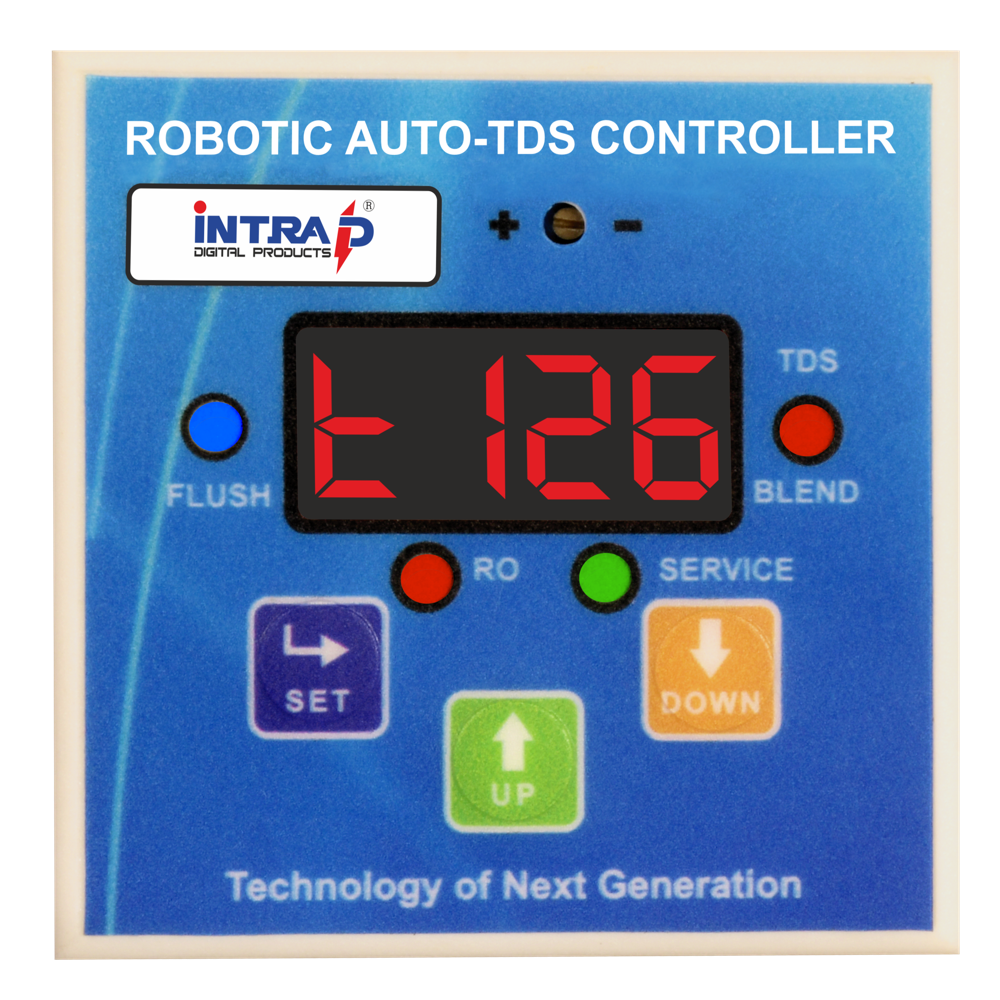
Smart TDS RO Controller
Price 1200.0 INR / Unit
Minimum Order Quantity : 10 Pieces
Warranty : 1 Year
Supply Voltage : 230 Volt (v)
Product Type : RO Controller
Frequency : 5060 Hertz (HZ)
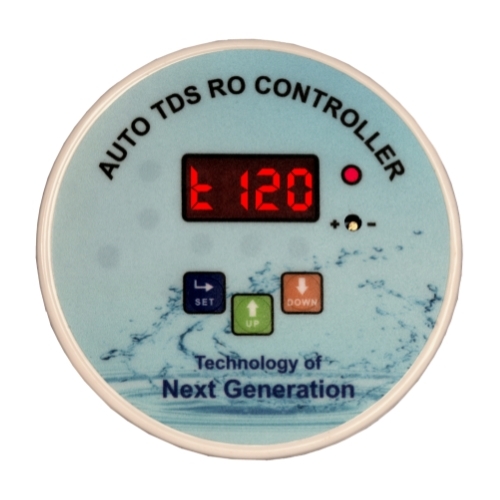
AUTO TDS RO CONTROLLER 83MM
Price 1300.0 INR / Piece
Minimum Order Quantity : 1 Piece
Warranty : 1 year
Supply Voltage : 24 Volt (v)
Product Type : Electrical device
Frequency : 50 Hertz (HZ)
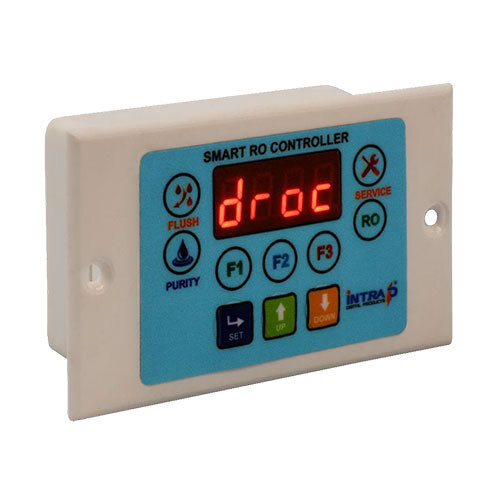
SMART RO CONTROLLER
Price 2500 INR / Piece
Minimum Order Quantity : 10 Pieces
Warranty : 1 Year
Supply Voltage : 220 Volt (v)
Product Type : SMART RO CONTROLLER
Frequency : 50 Hertz (HZ)
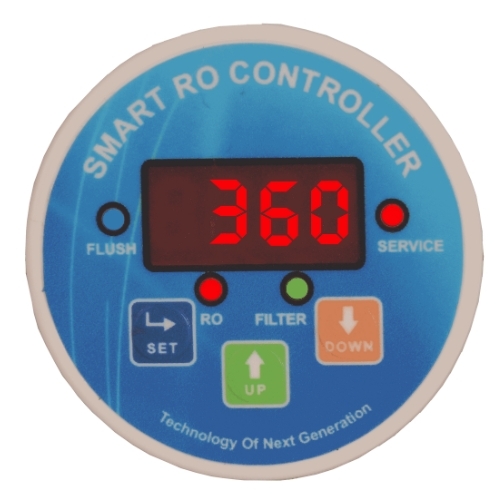
Smart RO Controller
Price 2500 INR / Piece
Minimum Order Quantity : 1 Piece
Warranty : 1 Year
Supply Voltage : 230 Volt (v)
Product Type : RO Controller

 Send Inquiry
Our Products


P.No.21, 1st Floor, Kapra, Srinagar - Parmila Nagar Colony,Hyderabad - 500062, Telangana, India

Mr K. Srinivasa Reddy
(Partner)
Mobile :07971550555
 Send Inquiry
 Send SMS
 Call Me Free
Developed and Managed by Infocom Network Private Limited.
